

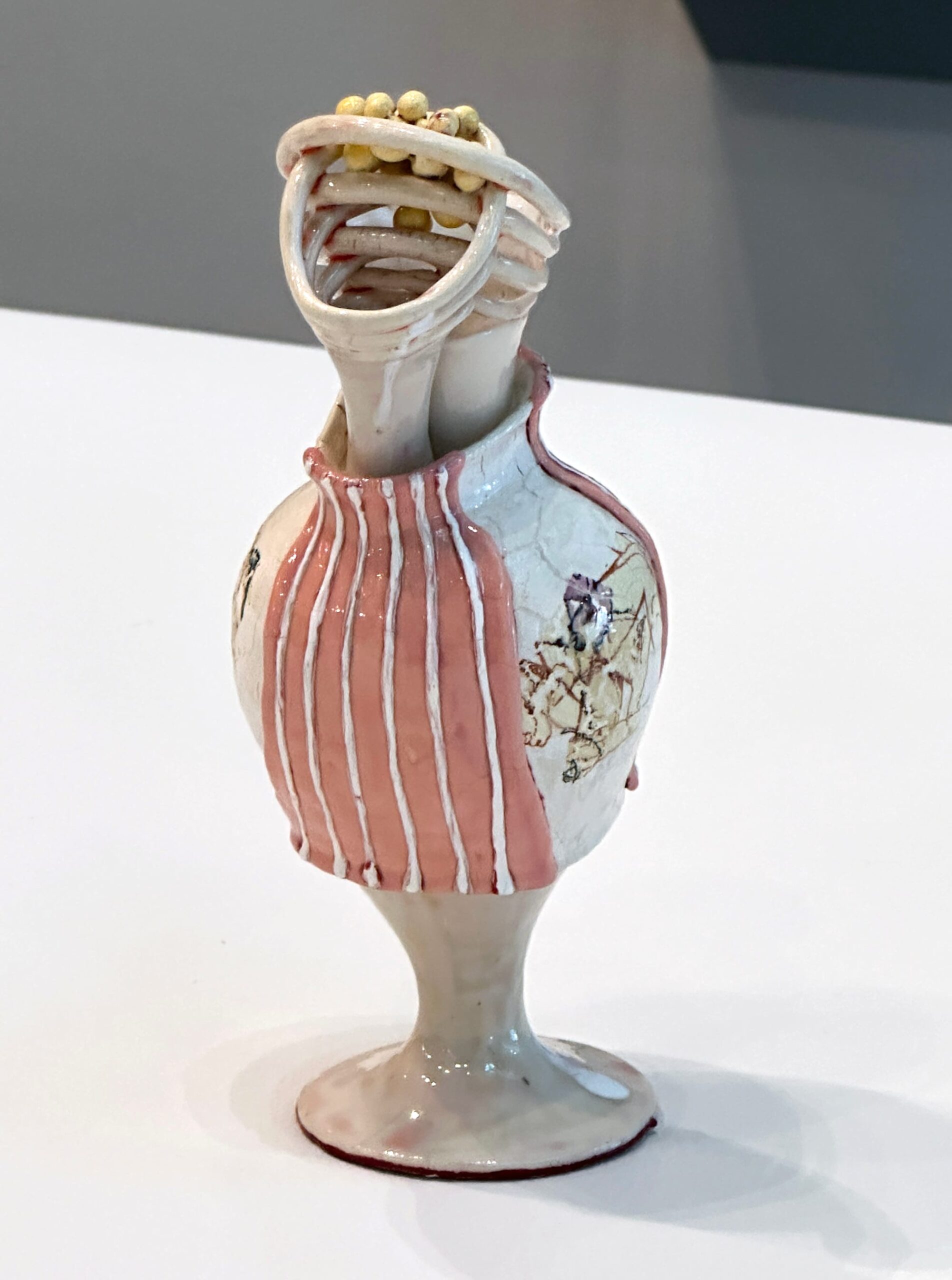
SARATOGA SPRINGS, N.Y. — Kathy Butterly’s marvelous retrospective Kathy Butterly: Assume Yes spans 32 years of small-scale ceramic sculptures — and “small-scale” puts it mildly. The first work in the exhibition, “Eddy’s Skirt” (1994), around eight inches tall and three inches wide and deep, is a mesmerizing treasure. It has also rarely been seen by the public since its gallery debut decades ago.
“Eddy’s Skirt” is a mostly beige jar- or urn-like object with pink and white stripes curving down its surface, suggestive of a skirt — one of many evocations of female apparel and adornment in her work — set atop an hourglass base. It is a decidedly idiosyncratic version of a utilitarian ceramic vessel, but also hints at the curves and contours of the human, particularly female, body, with suggestions of a midriff, neck, and head, one example of the merging of humans and non-human in Butterly’s work. Nesting in interlacing beige strands at the top — a bit like wickerwork or a rib cage seeded with slight, red splotches — is a cluster of tiny balls, each meticulously handcrafted: seeds in a pod, eggs, pearls, maybe even ideas in a brain. Abstract markings adorn the “skirt.”
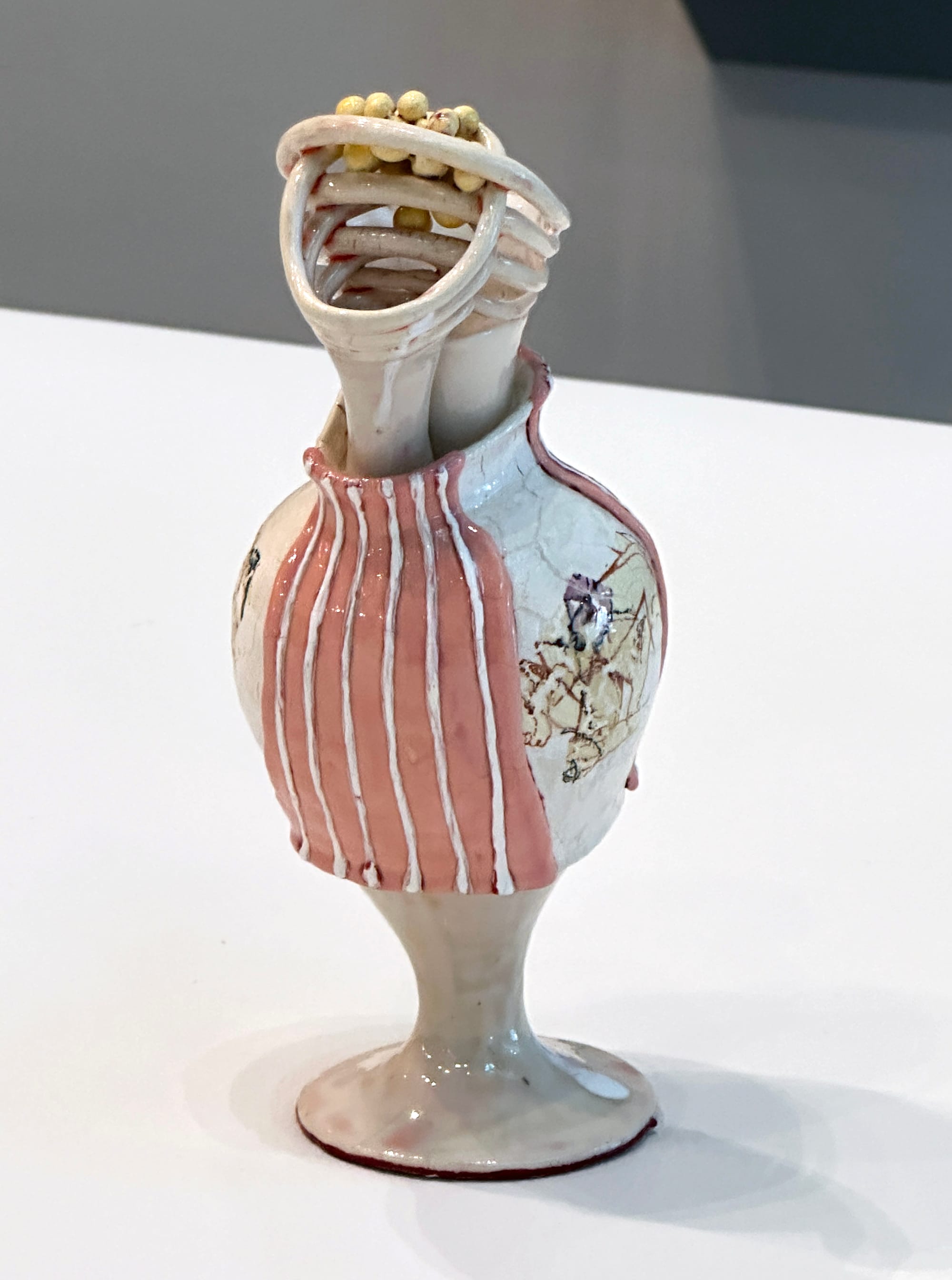
This hybrid vessel/figure is close to the bone. It leans forward, expectantly, as if about to take center stage, but also seems hesitant, even vulnerable — an admixture of avidity and trepidation. Butterly has a remarkable way of channeling nuanced spirit, keen emotions, and complex psychological states into her innovative and riveting creations, a defining feature of her entire body of work.
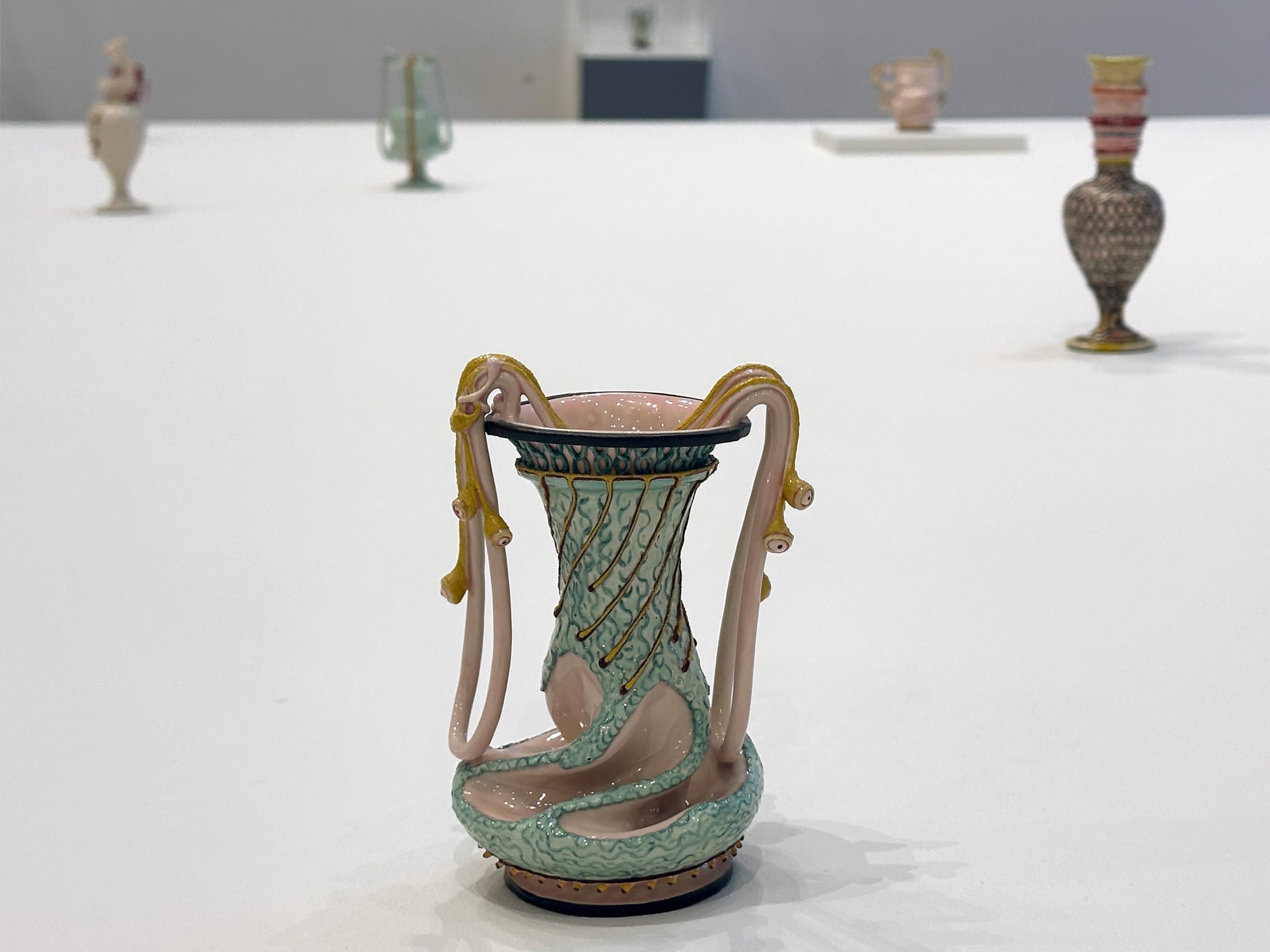
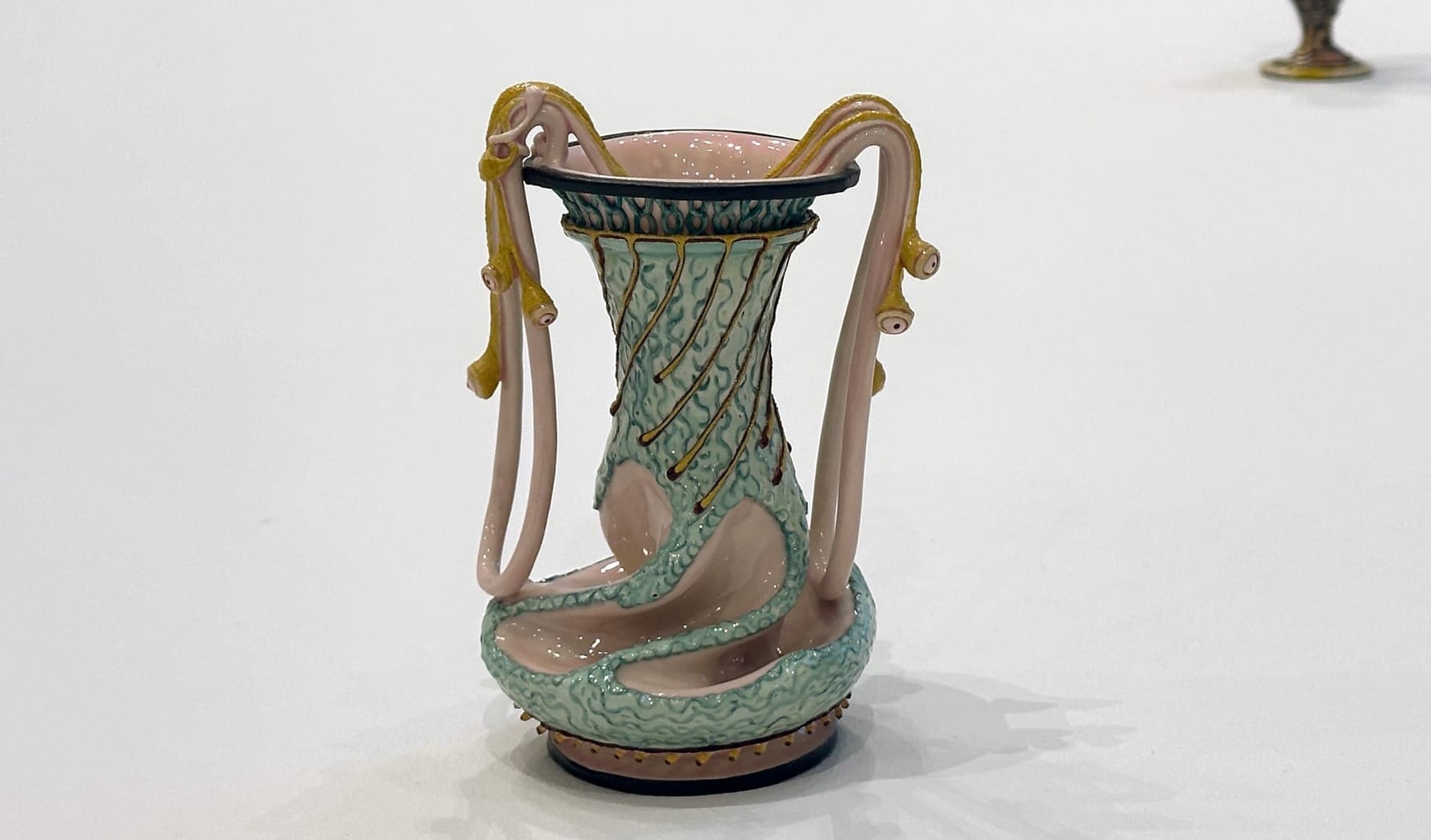
Wonders abound throughout the exhibition — each sculpture both a beckoning event and a voyage. Butterly’s quasi-vessels incorporate folds, indentations, apertures, and coverts, which hint at bodily, biomorphic, and natural forms, including geological structures and such world-shaping processes as gravity, sedimentation, erosion, eruptions, and landslides. They also connect with various art-making procedures, like pours, drips, and spills.